Building habits that truly last isn’t about willpower alone—it’s about understanding the psychology behind behavioral change and applying proven strategies that transform temporary actions into permanent lifestyle shifts.
Why Most People Fail at Building Lasting Habits 🚫
The statistics are sobering: approximately 80% of New Year’s resolutions fail by February, and countless individuals find themselves trapped in cycles of starting and stopping healthy behaviors. This phenomenon isn’t a reflection of personal weakness or lack of motivation—it’s a fundamental misunderstanding of how habit formation actually works in the human brain.
Traditional approaches to habit building often rely heavily on motivation and discipline, two notoriously unreliable resources. Motivation fluctuates based on mood, energy levels, and external circumstances. When we depend solely on feeling motivated to exercise, eat healthily, or practice meditation, we’re setting ourselves up for inconsistency and eventual failure.
The real challenge lies in the gap between our intentions and our actions. We intellectually understand that regular exercise benefits our health, yet millions struggle to maintain a consistent workout routine. We know meditation reduces stress, but our cushions gather dust. This disconnect reveals a critical truth: knowledge alone doesn’t create behavioral change.
The Neuroscience Behind Habit Formation 🧠
Understanding how your brain creates and maintains habits is the first step toward mastering lasting change. Neuroscientists have discovered that habits are formed through a neurological loop consisting of three components: a cue, a routine, and a reward. This pattern, identified by researchers at MIT, explains why certain behaviors become automatic while others require constant conscious effort.
When you repeat a behavior in response to a specific cue and receive a reward, your brain begins creating neural pathways that make this sequence increasingly automatic. Over time, these pathways strengthen, requiring less cognitive energy to execute. This is why brushing your teeth feels effortless—it’s been programmed into your brain’s basal ganglia, the region responsible for automatic behaviors.
The process of myelination further reinforces these neural pathways. Each time you repeat a behavior, a fatty tissue called myelin wraps around the neural circuit, making signal transmission faster and more efficient. This biological process explains why breaking old habits feels so difficult—you’re literally working against well-insulated neural highways.
The Role of Dopamine in Habit Sustainability
Dopamine, often called the “reward molecule,” plays a crucial role in habit formation. Contrary to popular belief, dopamine isn’t released when we experience pleasure—it’s released in anticipation of a reward. This neurochemical response is what drives us to repeat behaviors and explains why habits can become so powerful.
When you’re building a new habit, your brain is constantly evaluating whether the behavior is worth the effort. By engineering small, immediate rewards into your habit routine, you trigger dopamine release that reinforces the behavior. This is why tracking progress, celebrating small wins, and creating enjoyable aspects within challenging habits significantly increases adherence rates.
The Foundation: Starting Ridiculously Small 📏
One of the most transformative concepts in modern habit science is the principle of starting so small it seems almost laughable. James Clear, author of “Atomic Habits,” advocates for the two-minute rule: when starting a new habit, it should take less than two minutes to complete. Want to develop a reading habit? Commit to reading one page. Want to exercise daily? Start with a single push-up.
This approach works because it eliminates the psychological resistance that prevents us from starting. Our brains are wired to conserve energy, and when we propose ambitious changes—like exercising for an hour daily—our internal resistance mechanisms activate. A one-minute workout, however, seems so manageable that our brain offers minimal resistance.
The brilliance of this strategy lies not in the minimal action itself, but in establishing the identity of someone who performs that behavior. When you do a single push-up daily, you become “someone who exercises daily.” This identity shift is more powerful than any specific behavioral outcome because it influences countless future decisions.
Environmental Design: Making Good Habits Inevitable ✨
Your environment shapes your behavior far more powerfully than your willpower ever could. Research in behavioral psychology demonstrates that humans are highly susceptible to environmental cues, often making decisions based on what’s most convenient rather than what’s most beneficial. This tendency can work against you—or become your greatest ally in building lasting habits.
The principle of environmental design involves restructuring your physical and digital spaces to make desired behaviors easier and undesired behaviors more difficult. Want to drink more water? Place water bottles in every room. Struggling with smartphone addiction? Create a charging station outside your bedroom. These simple modifications reduce the friction between you and your desired behaviors.
The Power of Strategic Friction
While reducing friction for good habits is essential, strategically increasing friction for bad habits is equally powerful. If you want to reduce social media consumption, log out of apps after each use, requiring conscious effort to log back in. If you struggle with late-night snacking, keep tempting foods in hard-to-reach places or better yet, outside your home entirely.
This approach leverages a psychological principle called “choice architecture”—designing environments that nudge people toward better decisions without restricting freedom. When healthy choices become the path of least resistance, you’re working with your brain’s natural tendencies rather than against them.
Implementation Intentions: The When-Where-How Formula 📍
One of the most research-backed strategies for habit formation is creating implementation intentions—specific plans that detail when, where, and how you’ll execute your desired behavior. Studies show that people who use implementation intentions are two to three times more likely to succeed in their goals compared to those who rely on general intentions.
Instead of saying “I’ll exercise more,” an implementation intention would be: “I will do 20 minutes of yoga in my living room at 7:00 AM on Monday, Wednesday, and Friday, immediately after my morning coffee.” This specificity eliminates decision fatigue and creates a clear neurological cue-routine pattern.
The formula is straightforward: “When situation X arises, I will perform response Y.” This if-then planning creates automatic behavioral responses that don’t require willpower or motivation. Your brain begins associating the cue (situation X) with the behavior (response Y), gradually making the action automatic.
Habit Stacking: Building on Existing Routines 🔗
Habit stacking is a powerful technique that leverages your existing habits as triggers for new ones. Since you already have dozens of firmly established habits—brewing coffee, brushing teeth, getting dressed—you can use these as anchors for behaviors you want to develop.
The formula is: “After [CURRENT HABIT], I will [NEW HABIT].” For example: “After I pour my morning coffee, I will meditate for two minutes,” or “After I brush my teeth at night, I will write down three things I’m grateful for.” This approach works because you’re attaching new behaviors to well-established neural pathways.
The key to successful habit stacking is ensuring the new habit fits naturally into the flow of your existing routine. Stacking a workout immediately after brushing your teeth might not make sense if you’re in pajamas, but stacking it after getting dressed could be perfect. Context matters tremendously in creating sustainable behavioral chains.
Tracking Progress: The Motivation Multiplier 📊
Visual progress tracking is one of the most underutilized yet powerful tools for habit maintenance. When you make progress visible—whether through a simple calendar X-mark system, a habit-tracking app, or a more elaborate system—you create a visual representation of your commitment that becomes motivating in itself.
The psychological principle at work here is called “the progress principle.” Research by Teresa Amabile at Harvard Business School revealed that making progress in meaningful work is the most powerful motivator for sustained effort. When you can see your streak of consecutive days, you activate both pride in your accomplishment and a desire not to break the chain.
Jerry Seinfeld famously used this technique for his comedy writing practice, marking an X on a calendar for each day he wrote new material. As the chain of Xs grew longer, the visual representation itself became a powerful motivator. Breaking a 30-day streak feels much more costly than breaking a 3-day streak, creating increasing returns on your consistency.
The Identity-Based Approach: Becoming Rather Than Doing 🎭
The most profound shift in habit formation thinking in recent years has been the move from outcome-based to identity-based habits. Traditional goal-setting focuses on what you want to achieve—lose 20 pounds, run a marathon, write a book. Identity-based habits focus on who you want to become—a healthy person, a runner, a writer.
This distinction might seem subtle, but it’s transformative. When your habits are tied to outcomes, they’re temporary—once you achieve the goal or fail to achieve it, the motivation disappears. When your habits are tied to identity, they become part of who you are, creating intrinsic motivation that doesn’t depend on external results.
Every action you take is a vote for the type of person you want to become. Do one push-up, and you’ve cast a vote for being an athlete. Write one sentence, and you’ve voted for being a writer. These individual actions might seem insignificant, but they accumulate into evidence of your identity. As the evidence builds, your self-image shifts, and behaviors that align with this identity become natural expressions of who you are.
Crafting Your Identity Statement
To leverage this approach, create clear identity statements that reflect who you want to become. Instead of “I want to exercise more,” say “I am someone who prioritizes physical health.” Instead of “I should eat better,” say “I am someone who nourishes my body with whole foods.” These statements shift your relationship with behaviors from obligation to identity expression.
Handling Setbacks: The Recovery Mindset 💪
Perhaps the most critical skill in building lasting habits isn’t preventing failures—it’s recovering from them effectively. The research is clear: everyone fails at maintaining habits at some point. The difference between those who build lasting change and those who don’t isn’t the absence of setbacks; it’s how quickly they return to the behavior after breaking their streak.
Adopting a “never miss twice” rule transforms your relationship with failure. Missing one workout, one meditation session, or one healthy meal is a single data point. Missing twice begins establishing a new pattern. By committing never to miss twice in a row, you prevent temporary lapses from becoming permanent regression.
This approach requires self-compassion rather than self-criticism. Research by Kristin Neff and others has demonstrated that self-compassion is more effective than self-criticism for long-term behavioral change. When you miss a habit, acknowledge it without judgment, investigate what led to the lapse, adjust your strategy if needed, and resume immediately.
Social Accountability: Harnessing the Power of Community 👥
Humans are fundamentally social creatures, and leveraging social dynamics significantly increases habit adherence. When we make our commitments public or join communities of people pursuing similar goals, we activate powerful psychological forces including social proof, accountability, and the desire to maintain consistency with our public declarations.
Finding an accountability partner who shares similar goals creates mutual support and gentle pressure. Knowing someone is expecting you to show up for a morning walk makes it considerably harder to skip. Joining communities—whether online forums, local clubs, or structured programs—provides both inspiration and normalization of the challenges you face.
The key is choosing accountability structures that feel supportive rather than punitive. Shame-based accountability typically backfires, while encouragement-based support systems enhance motivation and resilience. Share your progress, celebrate others’ wins, and create environments where vulnerability about struggles is welcomed.
Optimizing for Your Chronotype and Energy Patterns ⏰
Not all hours are created equal when it comes to habit execution. Understanding your chronotype—whether you’re naturally a morning lark or night owl—and your daily energy patterns allows you to schedule habits during windows when success is most likely.
Attempting to establish a 5 AM meditation practice when you’re naturally a night person creates unnecessary friction. Instead, align your habits with your biological rhythms. Schedule cognitively demanding habits during your peak mental energy periods and routine physical habits during mid-level energy times.
Pay attention to your energy, willpower, and focus throughout the day for a week. You’ll likely notice patterns—perhaps you have high energy in the morning but your willpower is strongest in the afternoon. Use this self-knowledge to strategically schedule your habit-building efforts when conditions are optimal.
Creating Lasting Transformation: Your Next Steps 🚀
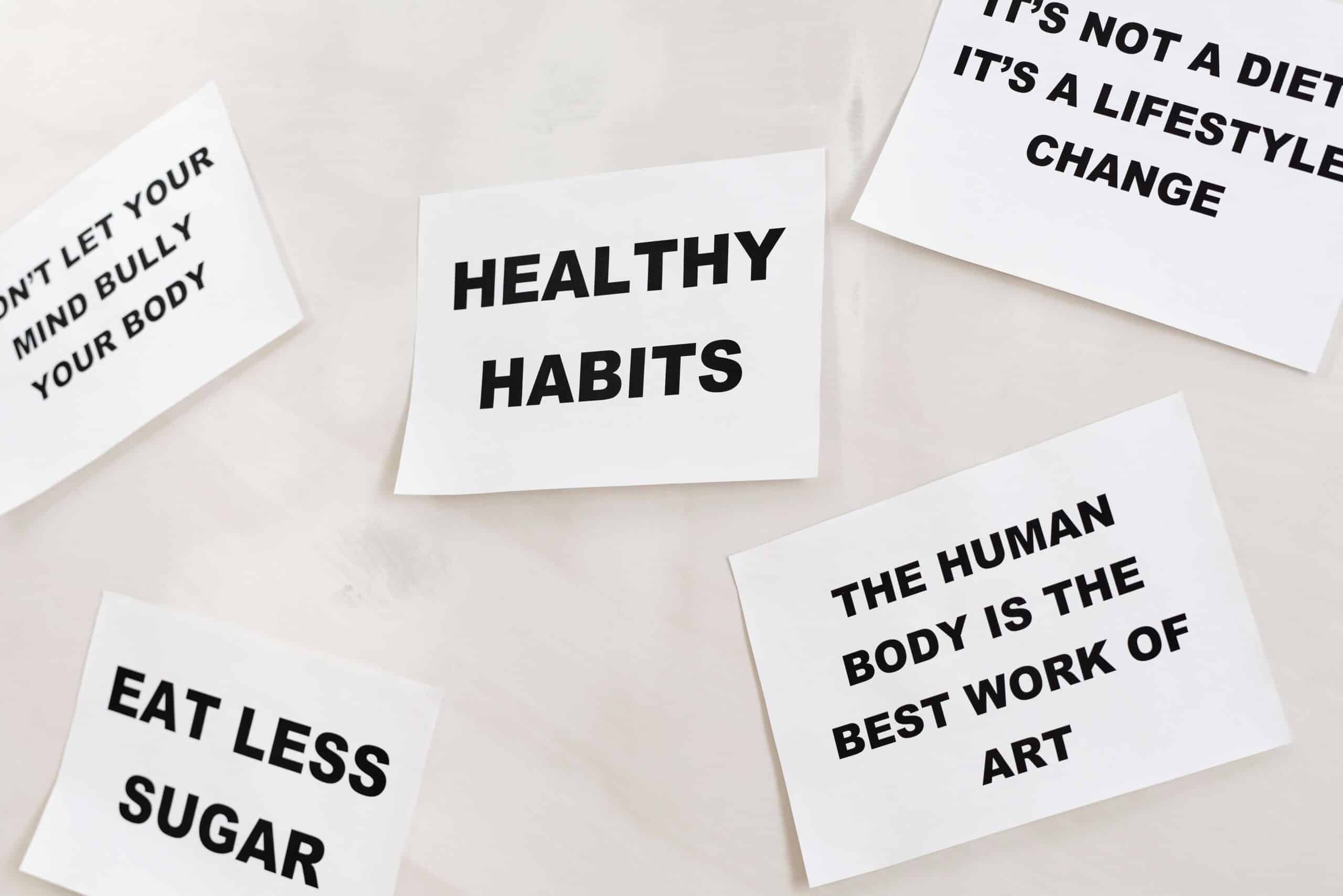
Building habits that genuinely stick requires a paradigm shift from the conventional approach of relying on motivation and willpower to a strategic system that works with your brain’s natural tendencies. The principles outlined here—starting small, designing your environment, creating implementation intentions, stacking habits, tracking progress, focusing on identity, recovering quickly from setbacks, leveraging community, and aligning with your energy patterns—form a comprehensive framework for lasting change.
The journey to a healthier, happier life through sustainable habits isn’t about radical overnight transformation. It’s about small, consistent actions compounded over time. Each tiny behavior you repeat is reshaping your neural pathways, accumulating evidence of your evolving identity, and building momentum toward the person you want to become.
Start today with one ridiculously small habit—so small you can’t say no. Focus on consistency over intensity. Track your progress. Recover quickly from inevitable lapses. Gradually, almost imperceptibly, these small actions will compound into remarkable results. The person you’ll become through this process isn’t just someone with better habits—it’s someone who has mastered the art of behavioral change itself, a skill that will serve you throughout every area of your life.
Remember that transformation is a journey, not a destination. Each day presents a new opportunity to vote for the person you want to become. Make those votes count, one small habit at a time, and watch as your life gradually transforms into a reflection of your highest aspirations and deepest values.

Toni Santos is a visual storyteller and sartorial artisan whose work revives the forgotten threads of historical fashion. With a deep fascination for garments lost to time, Toni weaves together art, memory, and material culture to illuminate the styles, symbols, and silent codes once stitched into humanity’s past.
His creative journey is rooted in a passion for clothing as narrative — from ceremonial robes of vanished empires to the subtle embroidery of medieval outcasts, from whispered meanings in Victorian accessories to the ritual adornments of ancient rites. Each piece Toni brings to life is more than aesthetic; it’s an echo of identity, power, belief, and transformation across centuries.
With a background in visual design and handcrafted techniques, Toni blends historical research with creative interpretation. His work reimagines the overlooked: the feathered cloaks, perfumed gloves, symbolic fastenings, and forbidden textiles that once defined entire cultures — now reborn as visual artifacts that speak across time.
As the visionary behind Vizovex, Toni shares stories, artworks, and curated collections that reconnect audiences with the deeper meaning of what we wear — and what clothing reveals when it is finally seen not just as fashion, but as forgotten language.
His work is a tribute to:
The poetry of garments lost in history’s folds
The cultural codes woven into ancient textiles
The beauty of attire as identity, memory, and myth
Whether you’re a fashion historian, a designer seeking timeless inspiration, or simply drawn to the mystery of what people once wore and why, Toni invites you to explore a world where forgotten fashions are revived — one stitch, one silhouette, one story at a time.