Your environment shapes your mindset, influences your habits, and ultimately determines your success. The space where you work, create, and think isn’t just a backdrop—it’s an active participant in your journey toward achieving your goals.
🎯 Why Your Physical Space Matters More Than You Think
The relationship between environment and performance has been studied extensively by neuroscientists and productivity experts alike. What they’ve discovered is remarkable: our surroundings directly impact our brain’s ability to focus, process information, and maintain motivation throughout the day.
When you walk into a cluttered, dimly lit room with uncomfortable furniture and distracting elements, your brain immediately registers stress signals. Cortisol levels rise, cognitive resources get diverted to processing environmental chaos, and your capacity for deep work diminishes significantly. Conversely, a well-designed success space primes your mind for peak performance before you even begin your tasks.
Research from Princeton University’s Neuroscience Institute demonstrates that physical clutter competes for your attention, reducing performance and increasing stress. Multiple visual stimuli present in disorganized spaces decrease your ability to focus and limit your brain’s information processing capacity.
🏗️ The Foundation: Decluttering and Organizing Your Success Zone
Before optimizing your environment, you must first eliminate what doesn’t serve you. Decluttering isn’t about minimalism for aesthetics—it’s about removing cognitive obstacles that drain your mental energy.
The Strategic Decluttering Process
Begin by removing everything from your workspace. Yes, everything. This blank slate approach allows you to intentionally choose what returns to your environment rather than passively accepting accumulated items. As you sort through belongings, ask yourself three critical questions: Does this item support my current goals? Have I used this in the past three months? Does this spark motivation or distraction?
Items that don’t pass this filter should be removed immediately. Create designated homes for everything that remains. Your stapler, notebooks, charging cables, and reference materials all need specific locations. This organizational system eliminates the micro-decisions that accumulate throughout your day and deplete willpower.
Digital Decluttering: The Often-Forgotten Dimension
Your digital environment deserves equal attention. Desktop clutter, overflowing email inboxes, and notification chaos create the same cognitive burden as physical disorder. Organize files into intuitive folder structures, unsubscribe from unnecessary emails, and ruthlessly manage notifications.
Task management applications help maintain digital organization by centralizing your projects, deadlines, and action items in one streamlined interface. This consolidation prevents the scattered attention that comes from juggling multiple platforms and sticky notes.
💡 Lighting: The Underestimated Productivity Accelerator
Lighting dramatically influences your circadian rhythm, mood, energy levels, and cognitive performance. Yet most people accept whatever lighting their space happens to provide without considering optimization opportunities.
Natural light should be your primary source whenever possible. Position your desk near windows to maximize daylight exposure. Studies published in the Journal of Clinical Sleep Medicine found that workers with windows in the workplace received 173% more natural light during work hours and slept an average of 46 minutes more per night than those without windows.
Layering Your Lighting Strategy
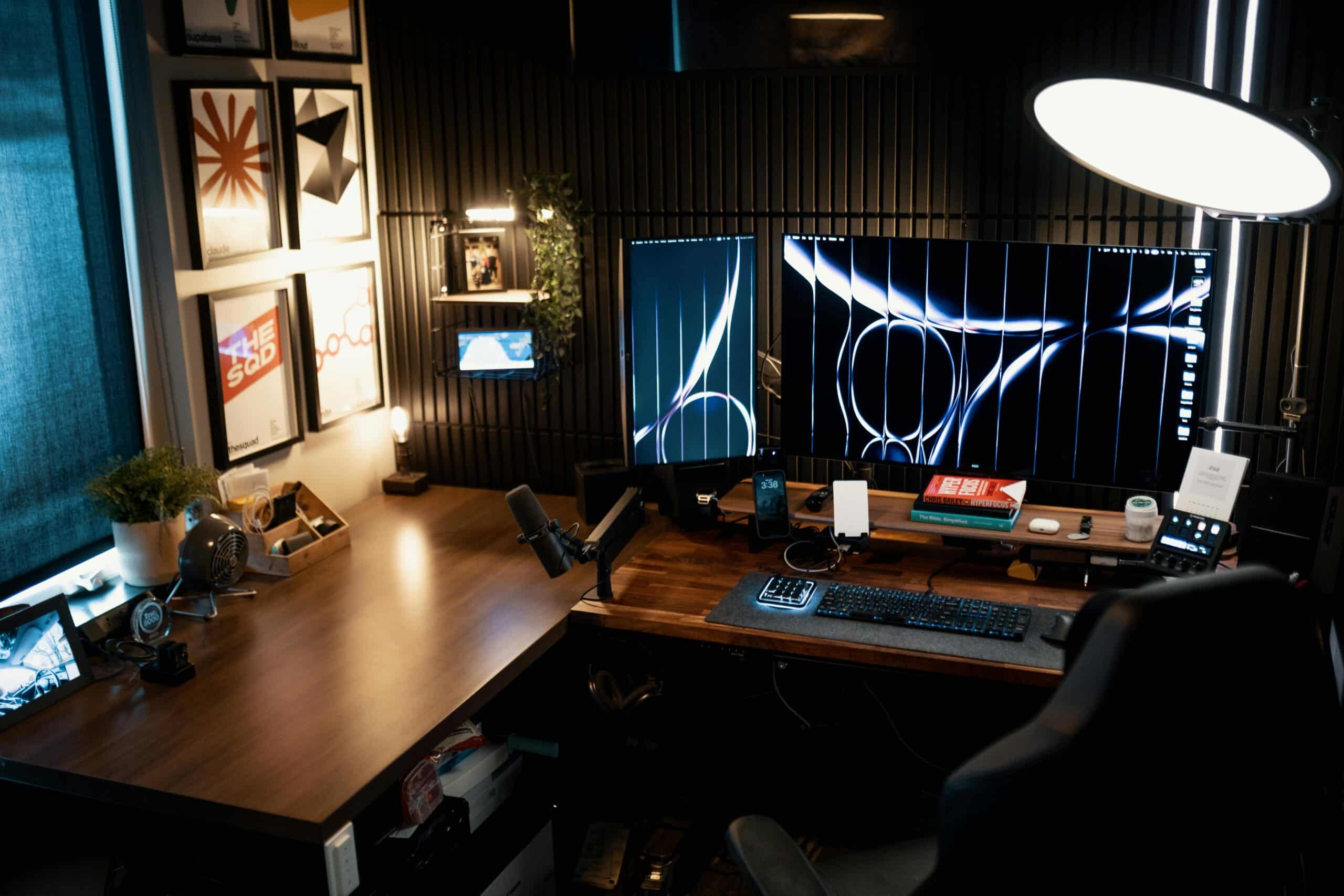
Since relying solely on natural light isn’t practical, create a layered lighting system. Ambient lighting provides overall illumination, task lighting focuses on specific work areas, and accent lighting can highlight motivational elements or reduce eye strain.
Consider color temperature carefully. Cooler light (5000-6500K) mimics daylight and promotes alertness, making it ideal for morning and afternoon work sessions. Warmer light (2700-3000K) creates a relaxing atmosphere suitable for evening wind-down periods or creative brainstorming.
Invest in adjustable lighting solutions that let you modify intensity and temperature throughout the day. This flexibility allows your environment to support your natural energy rhythms rather than working against them.
🪑 Ergonomics: Comfort That Compounds Into Achievement
Physical discomfort is a productivity assassin. That nagging back pain, neck tension, or wrist strain doesn’t just cause momentary distraction—it creates chronic stress that undermines your ability to enter flow states and sustain focus over extended periods.
Your chair represents one of your most important productivity investments. A quality ergonomic chair supports proper posture, reduces muscle fatigue, and prevents the long-term health issues associated with prolonged sitting. Look for adjustable seat height, lumbar support, armrests, and seat depth.
Desk Height and Monitor Positioning
Your desk should allow your elbows to rest at approximately 90 degrees when typing. Monitors should sit at arm’s length distance, with the top of the screen at or slightly below eye level. This positioning prevents the forward head posture that leads to neck strain and headaches.
Consider a sit-stand desk or converter that enables position changes throughout the day. Research indicates that alternating between sitting and standing improves focus, reduces discomfort, and increases overall energy levels compared to static positions.
Don’t overlook your keyboard and mouse. Ergonomic designs reduce repetitive strain injuries and improve comfort during extended work sessions. Small improvements in physical setup create massive dividends in sustained productivity over months and years.
🎨 Color Psychology: Strategic Visual Influence
Colors trigger psychological responses that influence mood, energy, and cognitive function. Understanding these effects allows you to intentionally design your space to support specific mental states.
Blue promotes calm focus and mental clarity, making it excellent for spaces requiring sustained concentration. Green reduces eye strain and creates feelings of balance, ideal for long work sessions. Yellow stimulates creativity and optimism but can become overwhelming in large doses. Red increases alertness and urgency, useful in small accents for deadline-driven work.
Rather than painting entire rooms, use color strategically through accessories, artwork, and organizational tools. A blue desk mat, green plants, or yellow accent pieces can provide psychological benefits without overwhelming your senses.
🌿 Nature Integration: Biophilic Design for Mental Performance
Humans possess an innate connection to nature—a phenomenon researchers call biophilia. Incorporating natural elements into your workspace taps into this connection, reducing stress, improving air quality, and enhancing cognitive function.
Plants represent the most accessible biophilic element. Snake plants, pothos, and spider plants require minimal maintenance while providing air purification benefits and visual appeal. Research from the University of Exeter found that enriching a previously lean office with plants increased productivity by 15%.
Beyond Plants: Other Natural Elements
Natural materials like wood, stone, and bamboo create warmth and connection to the outdoors. A wooden desk, stone paperweight, or bamboo organizer adds textural variety that stimulates your senses without causing distraction.
Water features, even small desktop fountains, produce white noise that masks distracting sounds while creating a calming atmosphere. Natural imagery—landscape photography or nature scenes—provides similar benefits when actual nature access is limited.
🔇 Sound Management: Controlling Your Auditory Environment
Noise pollution represents one of the most significant environmental productivity killers. Unexpected sounds trigger your brain’s threat detection systems, pulling attention away from tasks and preventing deep focus.
If you work in a noisy environment, noise-canceling headphones offer immediate relief. Quality models eliminate background chatter, traffic sounds, and ambient noise that fragments attention. For extended wear comfort, choose over-ear designs with plush padding.
Productive Soundscapes
Complete silence isn’t ideal for everyone. Many people perform better with appropriate background sound. White noise, nature sounds, or instrumental music can mask distracting noises while creating an auditory environment conducive to focus.
Music streaming platforms offer curated playlists specifically designed for concentration, featuring ambient, classical, or lo-fi instrumental tracks. Experiment to discover what works best for your focus style and task type.
Avoid music with lyrics during tasks requiring language processing—writing, reading, or analysis. Your brain struggles to simultaneously process linguistic input from multiple sources, reducing efficiency on both fronts.
🌡️ Temperature and Air Quality: The Invisible Performance Factors
Temperature significantly impacts cognitive performance. Research indicates that the optimal temperature for productivity ranges between 69-72°F (20-22°C). Temperatures outside this range reduce typing performance, increase error rates, and diminish concentration.
If you cannot control ambient temperature, adapt with layered clothing, desktop fans, or small space heaters. Personal temperature regulation prevents the distraction and discomfort that comes from being too hot or cold.
Air Quality Considerations
Poor air quality causes headaches, fatigue, and reduced cognitive function. Ensure adequate ventilation by opening windows when possible or using air purifiers with HEPA filters to remove pollutants and allergens.
Indoor plants contribute to air purification, though you’d need many plants to create significant air quality improvements. The psychological benefits they provide may matter more than measurable air quality changes for most home offices.
Monitor humidity levels, aiming for 40-60% relative humidity. Dry air irritates respiratory systems and causes discomfort, while excessive humidity promotes mold growth and creates a stuffy atmosphere. Humidifiers or dehumidifiers address extremes in either direction.
⚡ Energy Management Through Spatial Zones
Creating distinct zones for different activities helps your brain transition between mental states more effectively. When you consistently perform specific activities in designated locations, those spaces become environmental cues that trigger appropriate mental modes.
Designate your primary desk area exclusively for focused work. Avoid eating, scrolling social media, or entertainment at this location. Train your brain to associate this space with productivity and concentration.
If space permits, create a separate area for brainstorming or creative work with different lighting, seating, and visual elements. This distinction signals to your mind that different cognitive processes are required, facilitating smoother transitions between analytical and creative thinking.
Establish a transition zone where you prepare mentally before entering your work space. This might be as simple as a specific chair where you review your daily plan or a corner where you complete a brief meditation. These spatial boundaries create psychological separation between rest and work modes.
🖼️ Personalization: Motivation Without Distraction
Your success space should reflect your goals and values without becoming cluttered or distracting. Strategic personalization creates emotional connection and motivation while maintaining focus-friendly minimalism.
Display visual reminders of your objectives—vision boards, goal statements, or milestone trackers positioned where you’ll see them regularly. These elements reinforce purpose and maintain motivation during challenging work sessions.
Incorporate meaningful items that inspire you: awards representing past achievements, photographs capturing important moments, or quotes from mentors and thought leaders. Limit these items to prevent visual clutter that competes for attention.
Avoid excessive personal items unrelated to your goals. That collection of souvenirs or decorative objects might look nice but serves no functional purpose in your success space. Every element should either support productivity or provide meaningful motivation.
🔄 Regular Environment Audits: Maintaining Your Success Space
Your optimal environment evolves as your work changes, goals shift, and you discover what truly serves your productivity. Schedule quarterly environment audits to evaluate what’s working and what needs adjustment.
During these reviews, ask critical questions: Which environmental elements most support my focus? What distractions have crept back into my space? How have my needs changed since the last audit? What new tools or arrangements might serve me better?
Experiment with modifications based on your observations. Move your desk to capture different lighting, reorganize storage systems, or try new background sounds. Treat your environment as an ongoing experiment rather than a one-time setup.
Document what works through photos or notes. When you identify particularly productive periods, record the environmental conditions present—lighting, temperature, sounds, and organization. This data helps you recreate optimal conditions consistently.
💪 Implementation: Your 30-Day Environment Transformation
Transforming your environment doesn’t require massive renovations or expensive purchases. Strategic, incremental improvements create significant impact over time. Here’s a practical 30-day implementation framework:
Week 1: Declutter ruthlessly. Remove everything that doesn’t support your current goals. Organize remaining items into designated locations. Clean thoroughly to create a fresh foundation.
Week 2: Optimize ergonomics and lighting. Adjust desk height, monitor position, and chair settings. Evaluate natural light access and add task lighting where needed. These fundamentals dramatically impact daily comfort and focus.
Week 3: Integrate nature and manage sound. Add plants, natural materials, and nature imagery. Experiment with noise-canceling headphones, white noise, or focus music to find your ideal soundscape.
Week 4: Personalize strategically and establish zones. Add motivational elements that inspire without distracting. Create distinct areas for different work modes if space allows. Fine-tune temperature and air quality.
Throughout this process, notice how changes affect your productivity, mood, and focus. Adjust based on direct experience rather than assumptions about what should work.
🚀 The Compounding Returns of Environmental Excellence
The environment you craft doesn’t just influence single work sessions—it shapes your trajectory over months and years. Small daily improvements in focus, reduced physical discomfort, and enhanced motivation compound into extraordinary results over extended periods.
Consider that improving your daily productivity by just 10% through environmental optimization translates to dozens of additional productive hours monthly and hundreds annually. These recovered hours represent the difference between incremental progress and transformational achievement.
Beyond measurable productivity gains, your success space affects well-being, creativity, and satisfaction with your work. An environment designed to support your highest performance becomes a sanctuary where you’re excited to spend time rather than a space you tolerate or avoid.
Your environment either supports your ambitions or undermines them—there’s no neutral ground. Every element of your workspace communicates messages to your subconscious about what’s important, what’s possible, and what you deserve. Design a space that declares your commitment to excellence, and watch as your external environment shapes your internal reality.
Start today with one small change. Clear your desk, adjust your lighting, or add a plant. Each improvement builds momentum toward the ultimate success space that fuels your productivity, sharpens your focus, and accelerates your achievement. Your environment is waiting to become your most powerful ally in the pursuit of your goals.

Toni Santos is a visual storyteller and sartorial artisan whose work revives the forgotten threads of historical fashion. With a deep fascination for garments lost to time, Toni weaves together art, memory, and material culture to illuminate the styles, symbols, and silent codes once stitched into humanity’s past.
His creative journey is rooted in a passion for clothing as narrative — from ceremonial robes of vanished empires to the subtle embroidery of medieval outcasts, from whispered meanings in Victorian accessories to the ritual adornments of ancient rites. Each piece Toni brings to life is more than aesthetic; it’s an echo of identity, power, belief, and transformation across centuries.
With a background in visual design and handcrafted techniques, Toni blends historical research with creative interpretation. His work reimagines the overlooked: the feathered cloaks, perfumed gloves, symbolic fastenings, and forbidden textiles that once defined entire cultures — now reborn as visual artifacts that speak across time.
As the visionary behind Vizovex, Toni shares stories, artworks, and curated collections that reconnect audiences with the deeper meaning of what we wear — and what clothing reveals when it is finally seen not just as fashion, but as forgotten language.
His work is a tribute to:
The poetry of garments lost in history’s folds
The cultural codes woven into ancient textiles
The beauty of attire as identity, memory, and myth
Whether you’re a fashion historian, a designer seeking timeless inspiration, or simply drawn to the mystery of what people once wore and why, Toni invites you to explore a world where forgotten fashions are revived — one stitch, one silhouette, one story at a time.