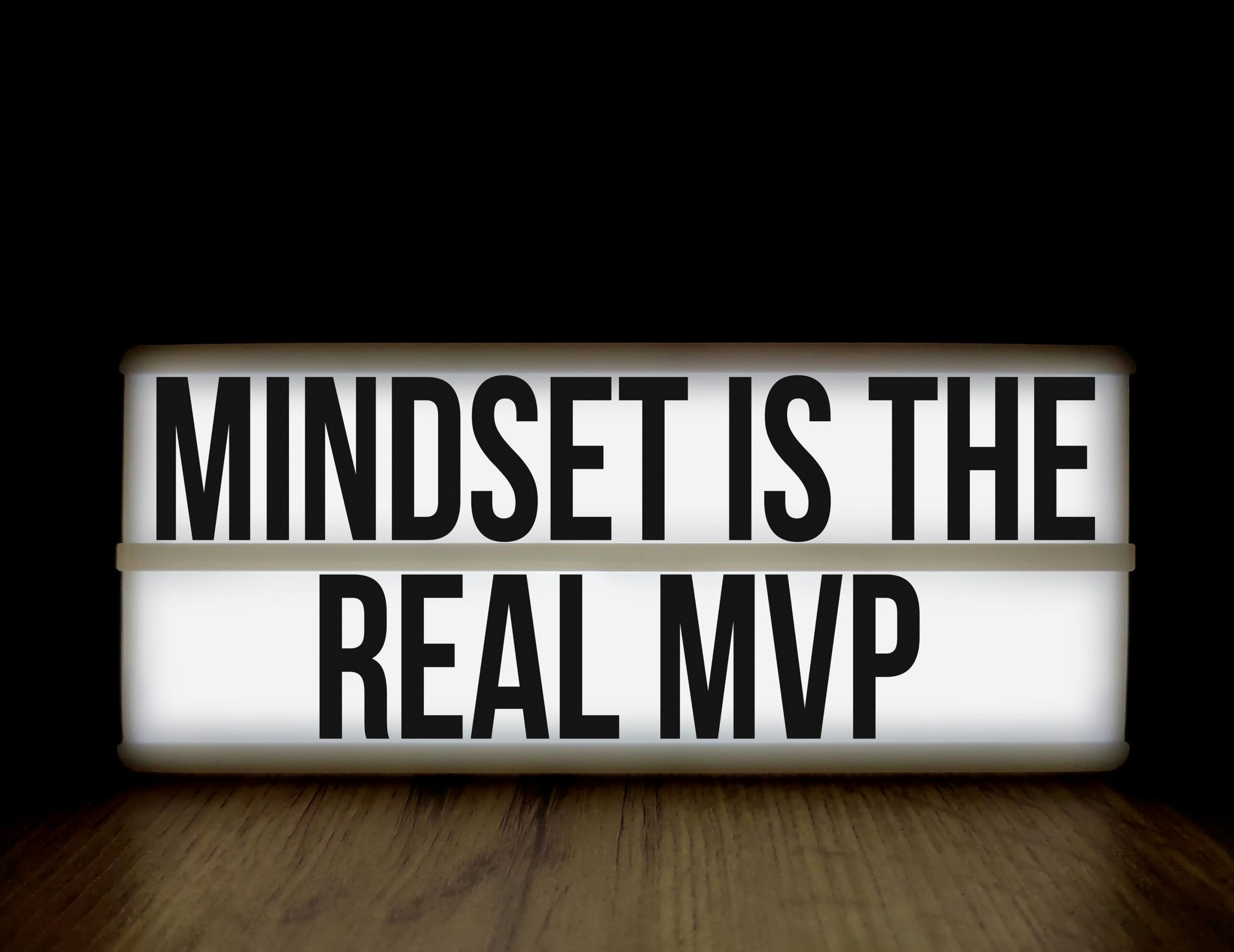
Building resilience isn’t about avoiding challenges—it’s about transforming how you respond to them. The mindset you cultivate today determines your ability to bounce back tomorrow.
In a world that seems to move faster every day, developing mental toughness isn’t just beneficial—it’s essential. Long-term resilience doesn’t happen by accident; it’s the result of intentional mindset shifts that rewire how you perceive obstacles, setbacks, and your own capabilities. This journey of transformation begins with understanding that your thoughts shape your reality, and by changing those thoughts, you can build an unshakeable foundation for lasting success.
The difference between people who thrive despite adversity and those who crumble under pressure often comes down to one critical factor: their mindset. While circumstances affect everyone, resilient individuals have learned to reframe challenges as opportunities, failures as feedback, and uncertainty as a chance to grow. This article explores the powerful mindset shifts that separate temporary motivation from unstoppable, long-term resilience.
🧠 Understanding the Foundation of Resilient Thinking
Resilience begins in the mind, long before it manifests in behavior. Your mental framework acts as a filter through which you interpret every experience, conversation, and setback. When you understand that this filter can be adjusted, recalibrated, and strengthened, you unlock the power to transform your entire life trajectory.
Research in neuroplasticity has proven that the brain remains malleable throughout our lives. This means the thought patterns you’ve developed over decades aren’t permanent—they’re simply well-worn paths that can be redirected with consistent effort. The key is recognizing that resilience isn’t an inherent trait you either have or don’t have; it’s a skill set you can develop through deliberate practice.
Many people mistakenly believe that resilient individuals simply don’t experience doubt, fear, or frustration. The truth is quite different. Resilient people feel all these emotions just as intensely as anyone else—they’ve simply developed better strategies for processing and moving through them rather than being paralyzed by them.
The Growth Mindset Revolution
At the core of resilient thinking lies what psychologist Carol Dweck termed the “growth mindset”—the belief that abilities and intelligence can be developed through dedication and hard work. This contrasts sharply with a fixed mindset, which assumes talents are innate and unchangeable. When you adopt a growth mindset, failure transforms from a verdict on your worth to valuable data about what to adjust next time.
People with growth mindsets don’t see challenges as threats to their ego but as opportunities to expand their capabilities. They understand that mastery in any area requires repeated failure, adjustment, and perseverance. This fundamental shift in perspective changes everything: suddenly, the difficult project at work isn’t evidence that you’re not smart enough—it’s a chance to develop new skills that will serve you for years to come.
💪 Shifting from Victim to Victor Mentality
One of the most transformative mindset shifts involves moving from a victim mentality to what’s often called a “victor” or empowered perspective. Victim mentality is characterized by feeling that life happens to you, that you’re at the mercy of external circumstances and other people’s decisions. While this perspective feels justified in the moment—especially after genuine hardship—it ultimately strips you of the power to change your situation.
The victor mentality doesn’t deny that bad things happen or that injustice exists. Instead, it focuses relentlessly on what you can control: your response, your effort, your attitude, and your next move. This shift is liberating because it redirects your energy from blame and resentment toward productive action and problem-solving.
Ask yourself: “What can I control in this situation?” Even when circumstances seem completely beyond your influence, you can almost always control your interpretation of events and your subsequent actions. This question becomes a pattern interrupt that pulls you out of helplessness and into agency.
Reframing Obstacles as Opportunities
Resilient individuals have mastered the art of reframing. When faced with an obstacle, instead of asking “Why is this happening to me?” they ask “What is this teaching me?” or “How can I use this?” This simple linguistic shift activates different neural pathways and opens up creative problem-solving rather than defensive rumination.
Consider maintaining a “benefits journal” where you regularly write about challenges you’re facing and identify potential opportunities hidden within them. A job loss might force you to explore a career you’re more passionate about. A failed relationship might teach you crucial lessons about your needs and boundaries. A business setback might reveal weaknesses in your strategy that, once addressed, make your foundation stronger than ever.
🎯 Embracing Discomfort as Your Growth Zone
Comfort is seductive but ultimately limiting. Long-term resilience requires developing a fundamentally different relationship with discomfort—seeing it not as something to avoid but as a signal that you’re expanding your capabilities. This mindset shift is challenging because our brains are wired to seek safety and conserve energy, both of which push us toward familiar routines and away from uncertainty.
The most successful people in any field have learned to befriend discomfort. They’ve trained themselves to recognize that feeling of unease that comes with new challenges as evidence they’re moving in the right direction. When you consistently choose comfort, you’re essentially choosing stagnation. When you lean into discomfort, you’re choosing growth.
This doesn’t mean seeking suffering for its own sake or ignoring legitimate needs for rest and recovery. Instead, it means calibrating your comfort thermostat slightly higher—regularly doing things that feel challenging but not overwhelming. Over time, what once felt impossibly difficult becomes your new normal, and you’re ready for the next level of challenges.
The Power of Voluntary Hardship
Ancient philosophies like Stoicism advocated for voluntary hardship—deliberately exposing yourself to discomfort to build mental toughness. Modern science validates this approach. Cold exposure, intermittent fasting, challenging physical exercise, and other controlled discomforts have been shown to increase stress resilience both psychologically and physiologically.
The principle is simple: when you voluntarily face manageable hardships, you prove to yourself that you can handle difficulty. This builds a reservoir of confidence that you can draw from when life presents involuntary challenges. You develop a track record of persevering through discomfort, which becomes evidence against the voice in your head that says “I can’t handle this.”
🔄 Developing Antifragility: Beyond Resilience
While resilience means bouncing back from adversity, antifragility—a concept developed by Nassim Taleb—means actually getting stronger from stress and volatility. This represents an even more powerful mindset shift: moving from merely surviving challenges to thriving because of them.
Antifragile systems improve with moderate stressors. Your immune system becomes stronger when exposed to pathogens. Your muscles grow when broken down by exercise. Your confidence expands when you face fears and survive. The antifragile mindset actively seeks controlled exposure to challenges because it recognizes that strength comes from adaptation to stress, not from avoiding it.
To cultivate antifragility, start viewing setbacks as training sessions. A difficult conversation that didn’t go well? You’ve just practiced a skill you’ll need countless times throughout your life. A project that failed? You’ve eliminated one approach and gathered data about what doesn’t work. Each challenge becomes a repetition in your resilience training program.
Building Multiple Pillars of Identity
Antifragility also comes from diversification. When your entire sense of worth is tied to a single role—your job, a relationship, a particular skill—you become extremely fragile. Any threat to that role becomes an existential crisis. Resilient individuals build multiple pillars of identity: their work, relationships, hobbies, values, community involvement, and personal growth.
When challenges affect one area, the others provide stability and perspective. This isn’t about spreading yourself thin but about developing a multidimensional sense of self that can’t be destroyed by any single setback. You’re not just your job title, your relationship status, or your physical appearance—you’re a complex person with varied interests, capabilities, and sources of meaning.
⏰ Shifting Your Time Perspective
One of the most powerful yet overlooked mindset shifts involves how you think about time. Short-term thinking makes you fragile; long-term thinking builds resilience. When you’re focused only on immediate outcomes, every setback feels catastrophic. When you zoom out to a longer timeline, individual failures become small data points in a larger trajectory of growth.
Ask yourself regularly: “Will this matter in five years?” This question provides instant perspective on most daily frustrations and anxieties. It doesn’t minimize legitimate concerns, but it helps you allocate your emotional energy appropriately. Some things genuinely deserve your worry and action; many don’t.
Conversely, asking “Where will I be in five years if I continue my current trajectory?” can be a powerful motivator for making difficult changes now. The compounding effects of daily habits—both positive and negative—are easy to ignore in the short term but become undeniable over years. Resilient thinking involves making present sacrifices for future benefits.
Playing the Infinite Game
Simon Sinek’s concept of the “infinite game” versus the “finite game” offers another valuable time perspective shift. Finite games have clear endpoints, winners, and losers—like a sports match. Infinite games have no ending; the goal is simply to keep playing and improve—like the game of building a meaningful life or career.
When you adopt an infinite game mindset, temporary losses don’t devastate you because there’s always another round. You’re not trying to “win” life by a certain age or achievement; you’re trying to keep growing, contributing, and evolving for as long as possible. This removes the artificial pressure of arbitrary deadlines and allows you to measure success by your direction rather than your position.
🗣️ Mastering Your Internal Dialogue
The most constant voice you hear throughout your life is your own internal commentary. This self-talk has enormous power over your resilience because it shapes how you interpret events and what you believe about your capabilities. Shifting from destructive to constructive self-talk is perhaps the most fundamental resilience practice.
Notice the difference between these internal statements: “I’m terrible at this” versus “I’m still learning this.” The first is a fixed judgment that closes down possibility; the second acknowledges current reality while leaving room for growth. “This always happens to me” versus “This happened this time; what can I do differently next time?” The first creates a narrative of helplessness; the second invites problem-solving.
Resilient self-talk isn’t about toxic positivity or denying difficulties. It’s about accuracy and empowerment. Instead of catastrophizing (“This is a disaster; everything is ruined”), try realistic assessment (“This is challenging and inconvenient, and I have the resources to handle it”). Instead of personalizing (“I’m such a failure”), try specific analysis (“This particular approach didn’t work; what can I adjust?”).
Developing Your Inner Coach
Imagine how you’d talk to a good friend facing the same challenges you’re experiencing. Most people are far more compassionate, encouraging, and constructive with others than with themselves. The mindset shift here involves extending that same kindness inward—developing an inner coach rather than an inner critic.
Your inner coach acknowledges difficulties while maintaining confidence in your ability to handle them. It provides honest feedback without harsh judgment. It celebrates progress rather than demanding perfection. It reminds you of past successes when current challenges feel overwhelming. Cultivating this voice requires conscious practice, but over time it can become your default mode of self-relating.
🌱 Connecting to Purpose Beyond Yourself
Perhaps the most profound mindset shift for long-term resilience involves connecting your daily struggles to a purpose larger than immediate comfort or personal gain. Viktor Frankl’s experiences in concentration camps taught him that humans can endure almost anything when they have a strong enough “why”—a sense of meaning that transcends current suffering.
When challenges arise, resilient individuals don’t just ask “How can I get through this?” but “What am I getting through this for?” Whether it’s providing for family, contributing to a cause you believe in, creating something meaningful, or becoming someone you’re proud of, purpose provides fuel when motivation runs dry.
This doesn’t require some grand, world-changing mission. Your purpose might be raising children with strong values, mastering a craft that brings you joy, supporting your community, or simply living with integrity. The key is that it extends beyond momentary feelings and connects your daily actions to something enduring and significant.
Values as Your Compass
Clarifying your core values—what truly matters to you independent of external validation—provides a north star during difficult times. When you know what you stand for, decisions become clearer and setbacks become less destabilizing. You might fail at a specific goal, but as long as you’re living according to your values, you maintain a sense of integrity and direction.
Take time to identify your top three to five core values. These might include things like growth, connection, creativity, integrity, adventure, or service. Then regularly ask yourself: “Are my current actions aligned with my stated values?” This practice helps you distinguish between superficial goals you’ve absorbed from society and authentic aspirations that truly motivate you.
🔋 Building Your Resilience Practices
Mindset shifts aren’t just philosophical concepts—they require daily practices that reinforce new thought patterns until they become automatic. Just as you wouldn’t expect to build physical strength without consistent exercise, you can’t build mental resilience without regular practice.
Consider implementing a morning routine that primes your mindset for resilience: gratitude journaling to train your brain toward appreciation rather than complaint, visualization of handling challenges successfully, reviewing your values and purpose, or setting intentions for how you’ll respond to difficulties that arise. These practices take minutes but compound over time into fundamentally different neural pathways.
Evening reflection is equally valuable. Review your day not just for what went right or wrong, but for how you responded to challenges. Did you catch yourself in victim mentality and shift toward empowerment? Did you reframe an obstacle as an opportunity? Did you choose discomfort over comfort in service of growth? Celebrate these moments of resilient thinking—what you acknowledge and appreciate tends to increase.
🚀 The Compound Effect of Small Mindset Shifts
The beauty of these mindset transformations is that they don’t require dramatic overnight changes. Small, consistent shifts in how you think compound over time into radically different outcomes. Choosing slightly more empowering self-talk today makes tomorrow’s self-talk a bit easier. Reframing one challenge this week makes the next one slightly less intimidating.
This is both encouraging and demanding. It’s encouraging because you don’t need to completely reinvent yourself immediately—you just need to be slightly more resilient today than yesterday. It’s demanding because there are no shortcuts; lasting transformation requires patience and persistence.
The person you’ll be five years from now is being shaped by the thoughts you’re thinking today. Every time you choose growth over comfort, empowerment over victimhood, long-term purpose over short-term ease, you’re casting a vote for the resilient version of yourself. Accumulate enough of those votes, and you’ll look back amazed at how far you’ve come.
Building unstoppable long-term resilience isn’t about becoming invulnerable to life’s challenges—it’s about developing such robust mental frameworks that no single setback can permanently derail you. It’s about transforming your relationship with difficulty itself, seeing it not as something to fear and avoid but as the very mechanism through which you become stronger, wiser, and more capable. The mindset shifts outlined here provide a roadmap for that transformation, but only you can take the daily steps required to make them real in your life.

Toni Santos is a visual storyteller and sartorial artisan whose work revives the forgotten threads of historical fashion. With a deep fascination for garments lost to time, Toni weaves together art, memory, and material culture to illuminate the styles, symbols, and silent codes once stitched into humanity’s past.
His creative journey is rooted in a passion for clothing as narrative — from ceremonial robes of vanished empires to the subtle embroidery of medieval outcasts, from whispered meanings in Victorian accessories to the ritual adornments of ancient rites. Each piece Toni brings to life is more than aesthetic; it’s an echo of identity, power, belief, and transformation across centuries.
With a background in visual design and handcrafted techniques, Toni blends historical research with creative interpretation. His work reimagines the overlooked: the feathered cloaks, perfumed gloves, symbolic fastenings, and forbidden textiles that once defined entire cultures — now reborn as visual artifacts that speak across time.
As the visionary behind Vizovex, Toni shares stories, artworks, and curated collections that reconnect audiences with the deeper meaning of what we wear — and what clothing reveals when it is finally seen not just as fashion, but as forgotten language.
His work is a tribute to:
The poetry of garments lost in history’s folds
The cultural codes woven into ancient textiles
The beauty of attire as identity, memory, and myth
Whether you’re a fashion historian, a designer seeking timeless inspiration, or simply drawn to the mystery of what people once wore and why, Toni invites you to explore a world where forgotten fashions are revived — one stitch, one silhouette, one story at a time.